
-
The Cheapest Quote Is the Most Expensive Thing You'll Ever Buy
-
The $14,000 Mistake That Changed Everything
-
Why 'Probably On Time' Is the Most Expensive Phrase in Procurement
-
The Math Nobody Wants to Do
-
What 'Delivery Certainty' Actually Means (And What It Doesn't)
-
"But You're Leaving Money on the Table"
-
What I Tell Every New Procurement Hire
The Cheapest Quote Is the Most Expensive Thing You'll Ever Buy
I'm a procurement manager. I've spent the last six years managing a $2.4 million annual equipment budget for a mid-sized industrial services company. I've negotiated with 40+ vendors across power generation, electrical distribution, and backup systems. And I'm going to say something that might get me kicked out of the procurement managers' club:
If you're buying power generation equipment — whether it's a small dual fuel generator for a remote site or a pressure compounded steam turbine for a plant expansion — and you're choosing vendors based on price alone, you're doing it wrong.
Not slightly wrong. Not "well, it depends" wrong. Honestly, dangerously wrong.
I didn't always think this way. In Q2 2023, I learned the hard way.
The $14,000 Mistake That Changed Everything
We needed two condensing steam turbines for a client project with a hard commissioning deadline. Tight timeline. We sent RFQs to eight vendors. Six came back in the $18,000–$22,000 range for the package. One came back at $14,200. That's not a typo — 30% below the next closest bid.
Our CFO loved it. I loved it. We awarded the contract.
The vendor promised delivery in "6–8 weeks." Week six came and went. Week eight came and went. At week eleven, we got a call: "We're having some supply chain issues with the pressure compounding stage. Can we push to week fourteen?"
That "supply chain issue" cost us $14,000 in client penalties, expedited freight on emergency rental equipment, and a very awkward phone call with our biggest account. The $3,800 we saved on the quote disappeared in less than 48 hours.
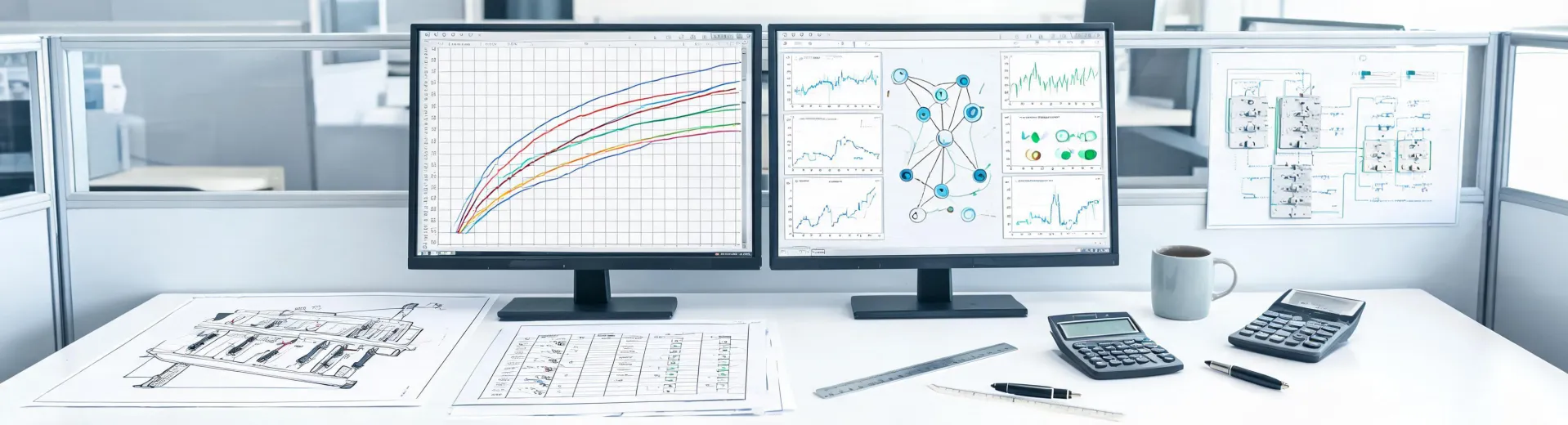
I spent the next month building a total cost of ownership spreadsheet that I now use for every single capital equipment purchase. It tracks not just unit price, but delivery variance, warranty response time, documentation quality, and — most importantly — the cost of a missed deadline.
Why 'Probably On Time' Is the Most Expensive Phrase in Procurement
Here's what I've learned after tracking 200+ equipment orders over six years:
Vendors who consistently hit delivery dates charge more because they've built systems to make it happen. Dedicated production slots. Redundant supply chains. Buffer inventory on critical components. That costs money, and they pass it on.
People think expensive vendors are just greedy. Actually, vendors who deliver on time can charge more precisely because they deliver on time. The causation runs the other way. You're not paying for the logo on the invoice — you're paying for the operational discipline that ensures your large house generator shows up when you need it, not three weeks after your deadline has already torpedoed your project schedule.
From the outside, it looks like two vendors are selling the same quiet dual fuel generator at different prices. The reality is one of them has done the unglamorous work of stockpiling critical components and training a production team that doesn't promise what it can't deliver.
That difference doesn't show up on a spec sheet. It shows up when your project manager calls at 7 AM asking where the equipment is.
The Math Nobody Wants to Do
Let's talk numbers. Because this is where my fellow procurement managers either nod along or quietly close the tab.
When I compare quotes for a generator diesel inverter, I don't just look at the invoice price. I look at:
- Late delivery penalty exposure. If this arrives three weeks late, what do we owe the client? In our contracts, that's typically $2,500–$8,000 per week depending on project scope.
- Emergency rental costs. If the equipment doesn't show, we're renting a replacement at roughly $1,200–$2,800 per week. That comes out of our margin, not the vendor's.
- Labor rescheduling. Every week of delay means our installation crew gets reshuffled. That's not free — it's about $4,000 per crew per week in lost productivity and rescheduling overhead.
- Reputation cost. This one doesn't show up in a spreadsheet, but it's real. We've lost two bids in the last three years because we couldn't guarantee our own timelines. Both were directly traceable to vendor delivery failures.
When I run the math, a vendor quoting $19,500 with a guaranteed delivery date is cheaper than a vendor quoting $15,800 with a "best efforts" timeline. Every time. Because the cheap vendor's quote doesn't include the cost of their uncertainty. You do.
"I assumed '6–8 weeks' meant six weeks if things went well and eight if they didn't. Turned out it meant eleven if the vendor felt like it."
What 'Delivery Certainty' Actually Means (And What It Doesn't)
I want to be precise here, because this isn't about blindly paying whatever a vendor asks.
Delivery certainty means the vendor has:
- Historical on-time performance you can actually verify. Not testimonials — you want to see their actual delivery records for the last 12–24 months on comparable equipment.
- Contractual penalties for late delivery. If a vendor won't put their money where their mouth is, that tells you everything you need to know about how confident they are in their own timeline.
- Documented contingency plans. What happens if a key component supplier fails? What's their backup? If they can't answer this, they don't have one.
- Direct communication with the production team. Not just a sales rep. You want a name, a number, and a person who actually knows the status of your order.
Here's the part that surprised me: after implementing our "delivery certainty" policy in 2024, our overall equipment costs actually went down by 7%. How? Because we stopped paying for emergency rentals, expedited freight, and client penalties. That's the reverse of what I expected. I thought paying for certainty meant paying more. It meant paying more up front and less overall.
I didn't fully understand the value of guaranteed delivery until that $14,000 mistake in 2023. Now it's the first line in every RFQ we send.
"But You're Leaving Money on the Table"
I hear this from colleagues all the time. And look, I get it. On a piece-by-piece basis, the guaranteed-delivery vendor is rarely the lowest quote. You can "save" 10–20% on paper.
But that savings is theoretical. It assumes everything goes right. And in my experience — six years, 200+ orders, at least a dozen vendor failures — things rarely go right when you're dealing with pressure compounded steam turbines, condensing units, and industrial-grade power equipment.
These aren't off-the-shelf items. They involve complex supply chains, specialized production, and lead times that can swing wildly depending on component availability. In that environment, a vendor who promises certainty is telling you they've invested in the systems to deliver it.
The vendors who promise the lowest price with the vague timeline? They're hoping nothing goes wrong. Hope is not a procurement strategy.
What I Tell Every New Procurement Hire
I mentor two junior procurement specialists on our team. The first thing I tell them is this: your job is not to get the lowest quote. Your job is to get the most predictable outcome.
The lowest quote is a starting point, not a decision. You have to layer on delivery risk, support access, documentation quality, and — yes — the vendor's willingness to be accountable when things go sideways.
If a vendor won't guarantee a delivery date, that's information. If they won't put a late-delivery penalty in the contract, that's information. If they can't connect you to someone who's actually touching your order, that's information.
All of it points to the same conclusion: they're not confident in their own timeline. And if they're not confident, why would you be?
For a small dual fuel generator or a generator diesel inverter, maybe that gamble is survivable. For a large house generator, a quiet dual fuel generator on a hospital backup system, or a condensing steam turbine in a production line — the stakes are too high. The math doesn't work.
Pay for certainty. The alternative is more expensive than you think. I've got the spreadsheets to prove it, and the scars from the times I ignored my own advice.
Have a procurement nightmare story about delivery failures? I collect them. It helps me feel better about my own $14,000 lesson. Drop a comment or reach out — I'm always curious how other teams handle the certainty-vs-price trade-off on large equipment purchases.

Kwame Boateng
Kwame Boateng is a transformer and power-conversion analyst specializing in distribution transformers, power supplies, inverters, and network integration. He uses IEC 60076 test data for transformer ratio, impedance, losses, and temperature rise, and IEC 62477-1 safety requirements for converter insulation and thermal boundaries while separately comparing harmonics and efficiency curves. He helps engineers and sourcing teams compare equipment against duty profiles, environmental limits, short-circuit behavior, lifecycle energy cost, and service requirements.